1. Plan around the light
Visit Tromsø places the polar night roughly between late November and mid-January. This does not mean complete darkness all day: a short period of twilight around midday can bring colour to the landscape. [1]
For a photo-led itinerary, look up the daylight for your actual dates before choosing departure times. Keep your most important landscape outing separate from an activity that already occupies the middle of the day.

2. Read the whale-watching departure details
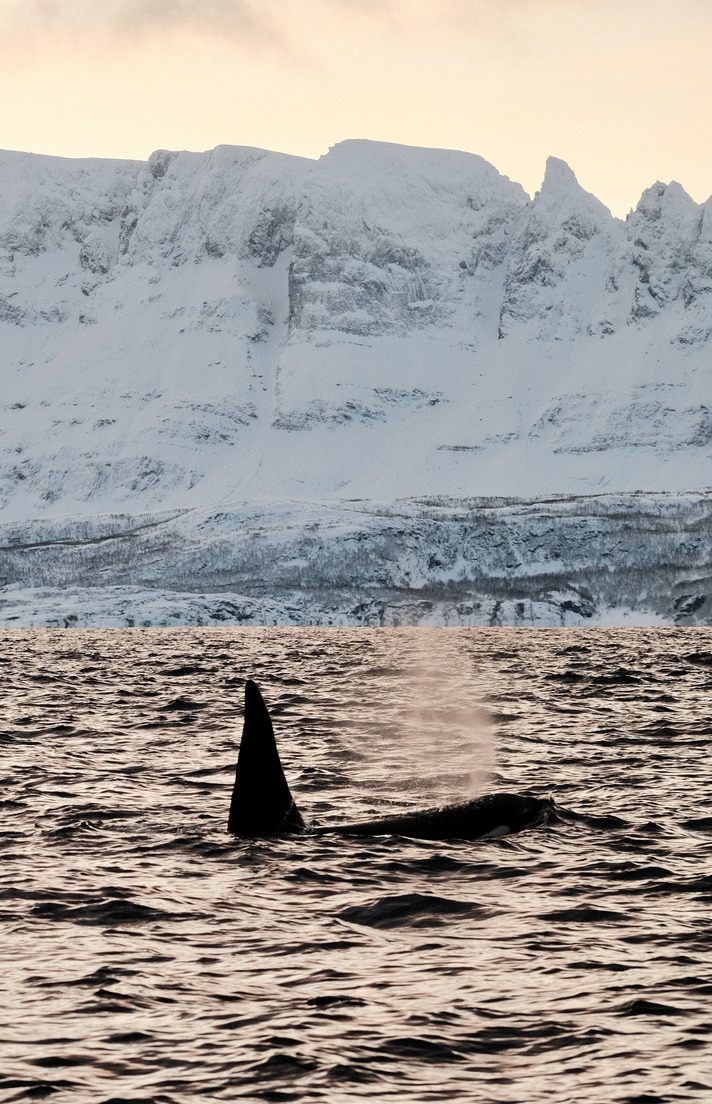
The local tourism board describes whale season as usually early November through January, with the timing and location varying as the herring move. In recent years, the waters around Skjervøy and Kvænangen have been important areas. Sightings are not guaranteed. [1]
Check whether your trip leaves Tromsø by boat, includes a road transfer and a boat from Skjervøy, or expects you to arrive in Skjervøy independently. These are different journeys, even when both are advertised as whale watching in the Tromsø region. [1][2]
3. Choose transport before choosing remote stays
Tromsø–Skjervøy travel can involve a car, bus or express boat. Visit Tromsø’s transport guide explains the options; current connections need to be checked for the specific day. Use the Svipper planner for buses and express boats. [2]
For winter roads, Visit Tromsø recommends public transport or organised activities with transport included. Its road-condition page links to the Norwegian Public Roads Administration and Yr for current information. [3]
If a remote cabin is part of the appeal, confirm how you will reach it, buy food and join any booked activities. A beautiful place to stay and a workable base are two separate planning decisions.
4. Give each day one main purpose
A simple planning framework is one local photography day, one full activity day and one flexible day. This is a suggested structure, rather than a timed itinerary: the distances, forecast and available transport should determine the final order.
For the local day, choose a small area and spend time with its changing light. On the activity day, check the meeting point, transfer arrangements and return time. Keep the flexible day open for a missed view or an unhurried return to a favourite place.
5. Check these details before booking
These notes combine planning suggestions with the official sources below. They are not a report of a particular tour or a promise of conditions on your travel dates.
- Daylight and twilight for your exact dates.
- The real departure town and transfer arrangements for each activity.
- Current bus, express-boat and ferry connections, including the return journey.
- Weather and road conditions close to departure.
- What clothing, food and equipment your operator supplies, and what you need to bring.
- Cancellation terms and a flexible alternative if an outing cannot run.
Sources & planning links
Check the original sources for current details before arranging your trip.